Market Position is Trademarked’s home for long-form case studies — where we treat culture like an economy and desire like data. We look at how identity, status, taste, and aspiration reorganize consumer behavior, then surface the inflection points that tell us where consumption is moving next.
TLDR… a [zillennial] think tank, if u will ;).
editor’s note: this one took months of research, i hope you enjoy it <3.
—
Everything’s a fucking status symbol.*
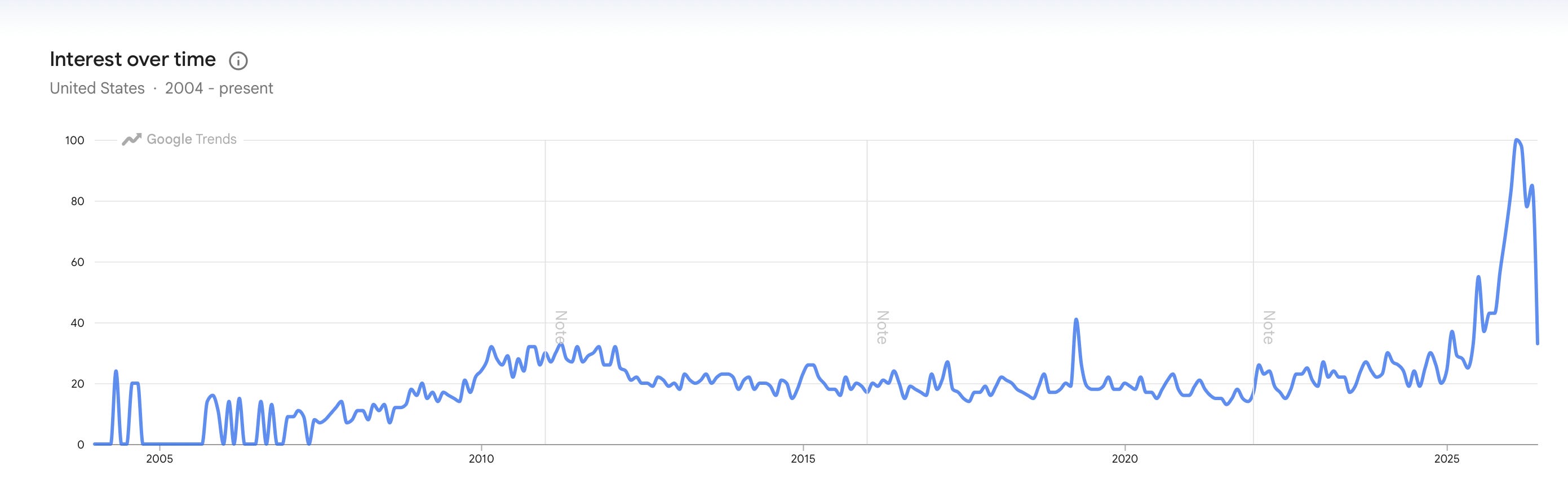
*Depending on who you ask… and depending on the parameters to which you’ve been conditioned to participate and/or care… status uniquely permeates… everything. It’s perhaps no different an experience than gravity — in that, you’d need to literally leave this planet to be rid of it, even if you claim to have never paid it a moment’s notice.
But much like Newton’s law, what goes up must come down. Within the dadaist bent that cultural discourse has taken, we’ve departed from the ires of quiet luxury and tomato girl summer and descended into the hyper-individualistic streak of taste. Which oftentimes accompanies the commoditization of having a media diet…. where we’ve largely landed upon the widespread (cough, accessible.. viral), yet vastly understudied (cough, theory-exempt) diatribes on “how to”:
develop cultural capital (hearing about loonen water)
spot status signals (seeing loonen water at the gym)
and don status symbols (buying and drinking loonen water)
And while at first thrilling, over time…. i fear it’s all starting to feel…… exhausting. Amongst readers of TM, my smartest and most interesting friends, and strangers whose opinions I respect, it feels like we’re nearing a tonal shift. It’s slight and it’s murky…. but (sorry), i tend not to be wrong about these things (read: i research against a relatively extensive operating framework). Thus — we must discuss;
For this piece to hit home, I’d like to underline a time-bound function related to status that everyone should be aware of: the more visible status is, the more quickly it dissipates.
Usually, status influences consumption of goods/ideas/vibes… but more rarely does status operate as an influence of itself. There’s a fascinating risk wherein, the more we, as a culture, focus on STATUS as STATUS rather than status GOODS as status, the less formidable status will become in predicting and deciding what moves the needle for consumption + consumers.
Which led me here: just as modernism eventually earned its post- and meta- afterlives, I wonder why we haven’t more widely explored what comes after status? Well, without having to teeter towards the line of das kapital, that is ;).