


Market Position is Trademarked’s home for long-form case studies — where we treat culture like an economy and desire like data. We look at how identity, status, taste, and aspiration reorganize consumer behavior, then surface the inflection points that tell us where consumption is moving next.
The Observation
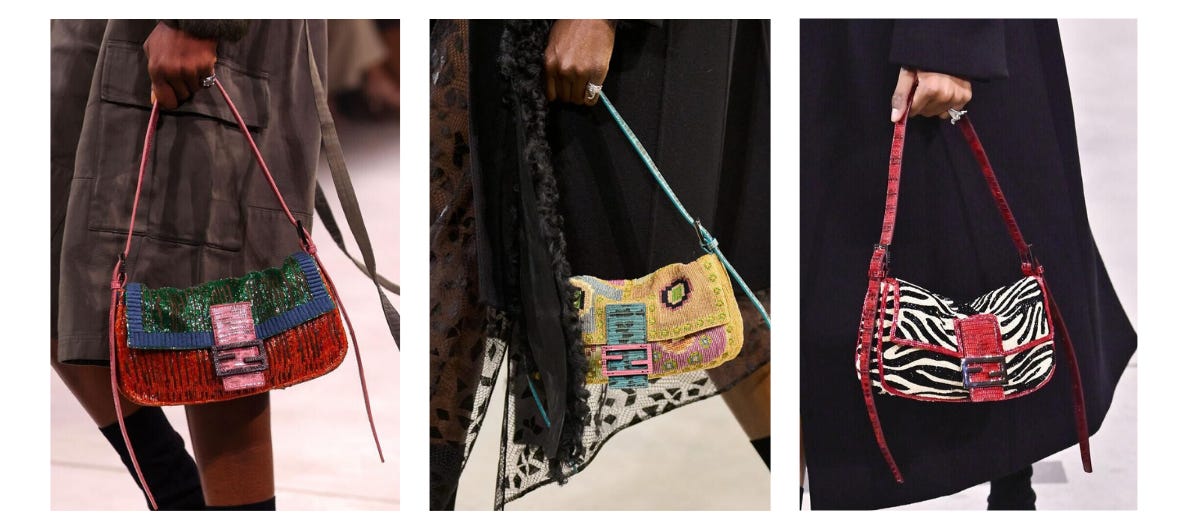
I can’t be the only one immune to the whims of the pursuit of whimsy. Unfortunately for me, that means lusting over the newly released Fendi FW26 Baguettes — designed by their newest CD, Maria Grazia Chiuri. I woke up on sunday and thought, what a perfect and fabulous treat to gift myself, until i was utterly bamboozled with the cost: $13,100.
I texted a screenshot to my EIHG BFF, WHAT???? And then felt the relief of OH, when i scrolled to the description and saw that not only was the bag hand-embroidered in silk & glass beads, but the cost was propped up by the fact that each one required a staggering 173 hours of expert craftsmanship. By contrast, my second favorite MGC baguette is retailing for $11K, with the $2.1k differential coming from the bag taking 77 fewer hours to make by hand (173h vs 96h).
At a dinner in paris w/ Oscar de la Renta earlier in the month, I was seated next to the brand’s Head of Embroidery. I’d never heard of such a title, and was struck with the urge to blurt — wait, i neeeeed you to be a talking head in a Netflix documentary. Thankfully, he took it well, and beguiled me with stories about how exactly one is granted the most whimsical job title in the world.
I opened my substack feed a few days later, to see Emily Sundberg noting how the next wave of Good Branding is stuff that looks like it was done by hand. Then, over the weekend, i went to my favorite place to determine the salience of a signal — Zara. I was floored by the sheer scale of beading, fringe, and embroidered clothing + accessories, designed to look intensively worked. Zooming out, it appears trickle-down economics is alive and well in the translation of luxury’s most precious emblems into mass-retail’s churn.
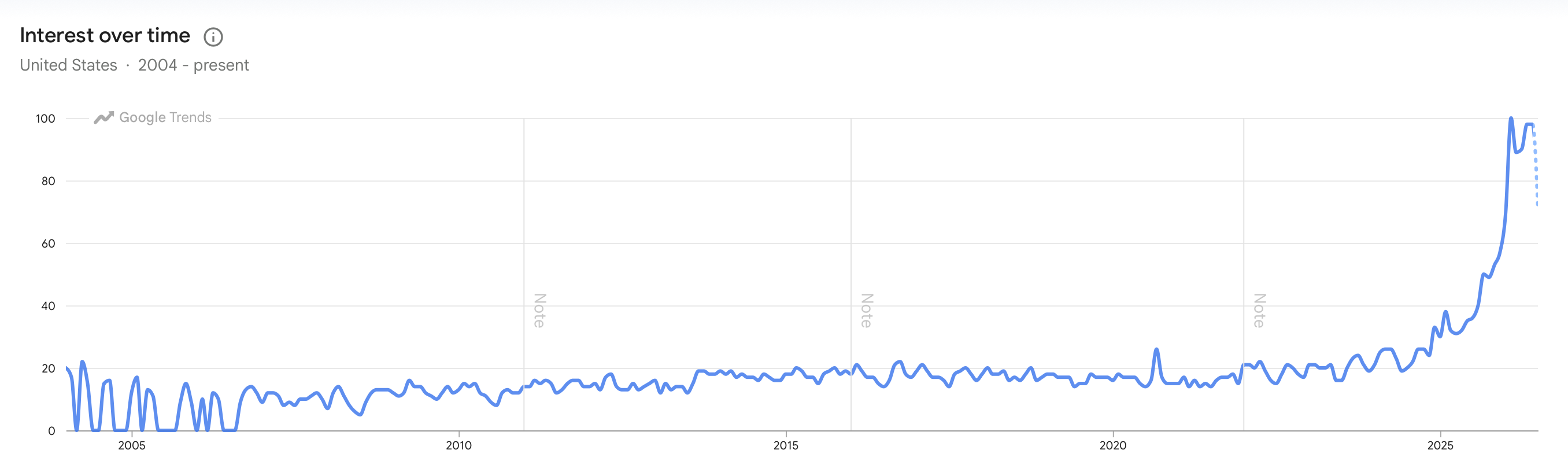
Meanwhile, Google search interest in “craftsmanship” has recently reached all-time highs; while searches for “embroidered” and “embroidery” hit all-time highs earlier this year.
On Monday, we also learned that LVMH, which had posted seven consecutive quarters of revenue declines, has turned a corner. Jonathan Anderson’s role at Dior played a huge part of that story, as the brand saw double-digit sales growth amongst Japanese and American clients in Q2. This is particularly interesting when weighted against the fact that Anderson leans heavily into the concept of craftsmanship to connect with consumers in both brand marketing/storytelling + what we’re seeing go down runways and hit stores.
Obviously…..this is the moment where my brain went from tick, tick, tick to THUD ! THUD ! THUD ! — it would be too easy to say, Trend Alert: embroidery is back! Fashion loves craftsmanship! Consumers yearn for it too!
That is not how we do things here, and not why you’re reading trademarked. Because what’s far more fun & interesting than simply spotting the treasure chest (which we’re good at) is plundering into it (where we shine). However, to do that well, we need a framework of questions that link us to the money (the grittiest signal to track a shift like this).
In that, I started asking, what’s being simultaneously hidden & commodified, what is that commodification in response to, and what does that commodification signal about the state of the consumer (with opportunity to strongly speculate on What’s Next).
To give you the final page of the book first, I landed here: logomania is back…. just not in the way we’ve been conditioned to consider what a logo is.
